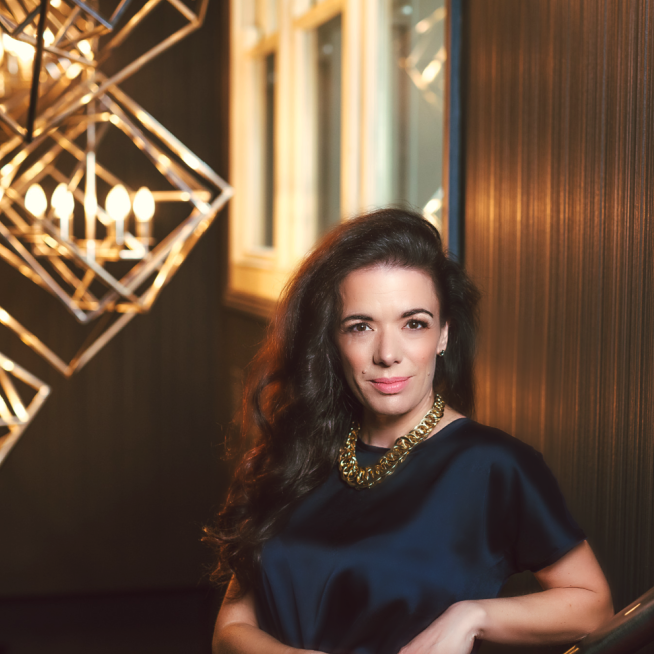
I didn't plan to become a coach.
I spent 7 years in tech as a marketing executive, then 8 years building a series of my own hospitality businesses — including my own TV show. I was good at performing. At producing. At making things look polished from the outside while quietly running on empty inside.
I knew how to build things. I just didn't know how to sustain myself while doing it.
The shift came slowly, then all at once. I started noticing that the most driven people around me were struggling in the same invisible ways I was. Brilliant decision-makers who couldn't sleep. Founders who'd built something real and felt nothing. Executives who “performed” confidence in the boardroom and fell apart at home. When a friend of mine died, leaving 3 kids behind, the same as mine — I paid attention. The loss hit me hard.
The conventional answer to life's bumps was therapy, or mindset work, or a better morning routine. I tried most of them. I even worked for the world's largest coaching company to get the inside scoop on how to unleash a better-performing version of myself. They helped, partially. But they treated the symptoms without ever getting to the wiring underneath.
So I went looking for what actually worked. I'd already studied psychology formally. I added NLP. Then hypnotherapy. Then nutrition with a specialization in nutrigenomics, because I kept watching people do the mental work and still feel stuck in their bodies, their energy, their biology. I needed to understand why.
What I found was that high performance doesn't break down in one place. It breaks down across body, mind, and energy all at once: how you're wired biologically, what your nervous system learned to do under pressure, and the decisions you made about yourself so long ago you've stopped questioning them.
Stella Polaris exists because I needed it to exist. And because the leaders I work with needed something that could hold all of that, without oversimplifying it into a framework that fits everyone and truly helps no one (not permanently, anyway).
I work with a deliberately small number of people each year because my work is deep, with personalized protocols and a high-touch experience. That's why the results don't reverse when the engagement ends.
We're all doing life for the very first time. Working together improves the quality of it with less effort.